A wardrobe accumulates value it rarely realises.
The bag out of rotation, the barely-worn coat, the watch kept in a drawer, each is worth real money to the right buyer. Selling it well is its own discipline.
Mask, posture, and background are not an issue
A face covering, a turned back, a mid-stride stance: none of it blocks the read. A busy room, a garden, a shop wall: the background is not an issue either. If the garment or accessory is in the frame, it still finds it. Where the design gives the house away, it names it as a lead to verify; where it does not, it says so honestly. The photograph you already took is usually the one it needs.
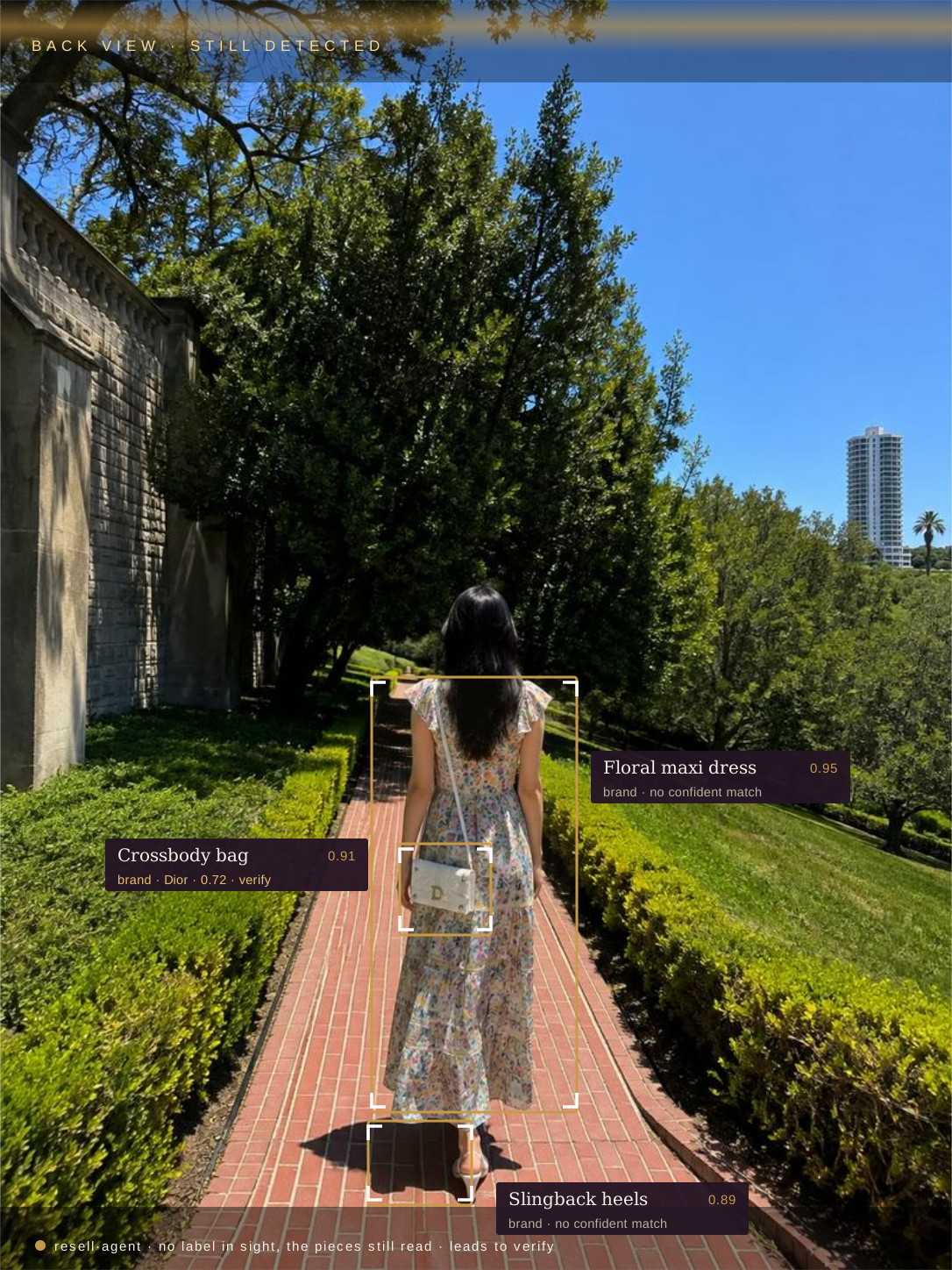
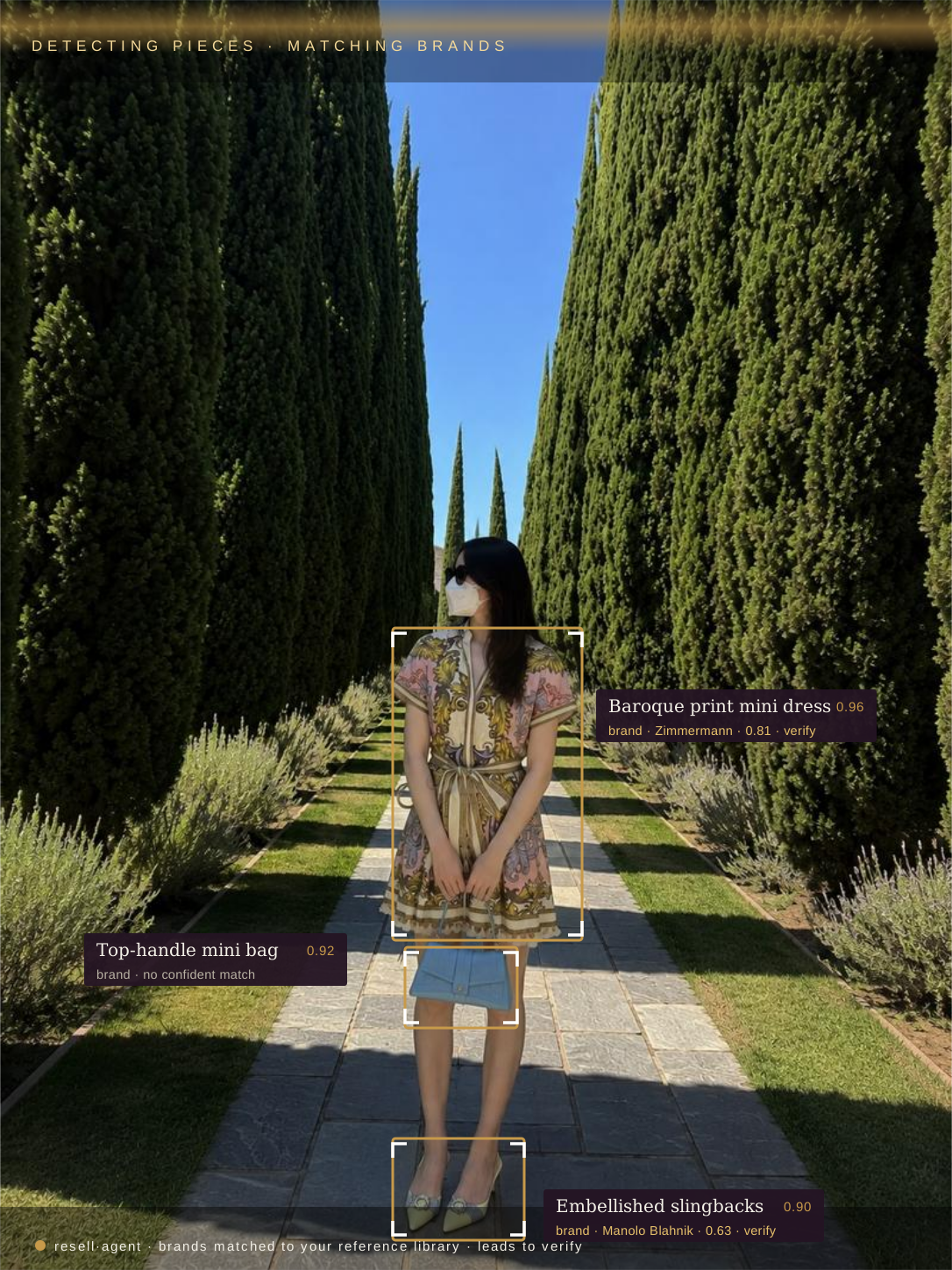
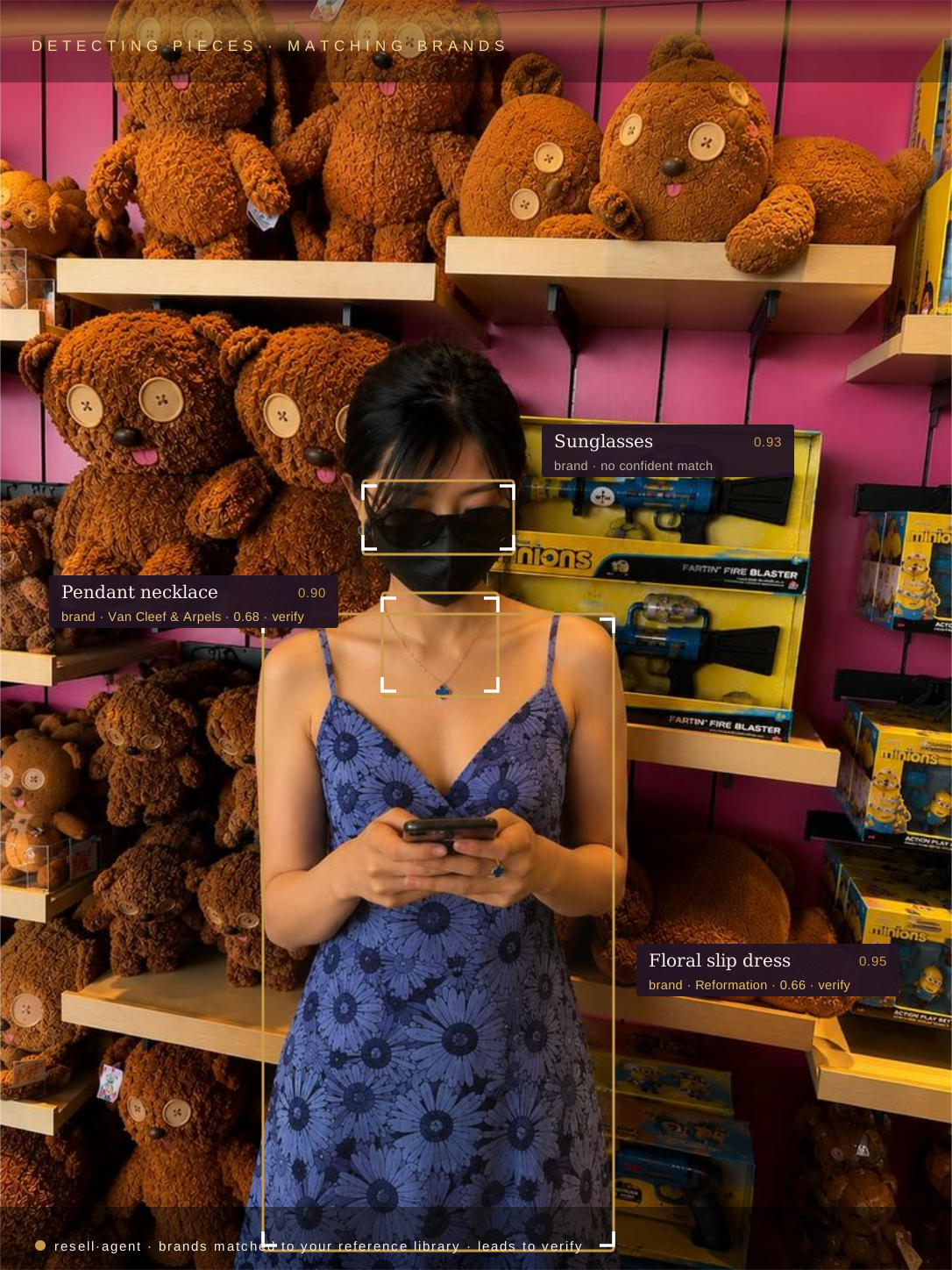
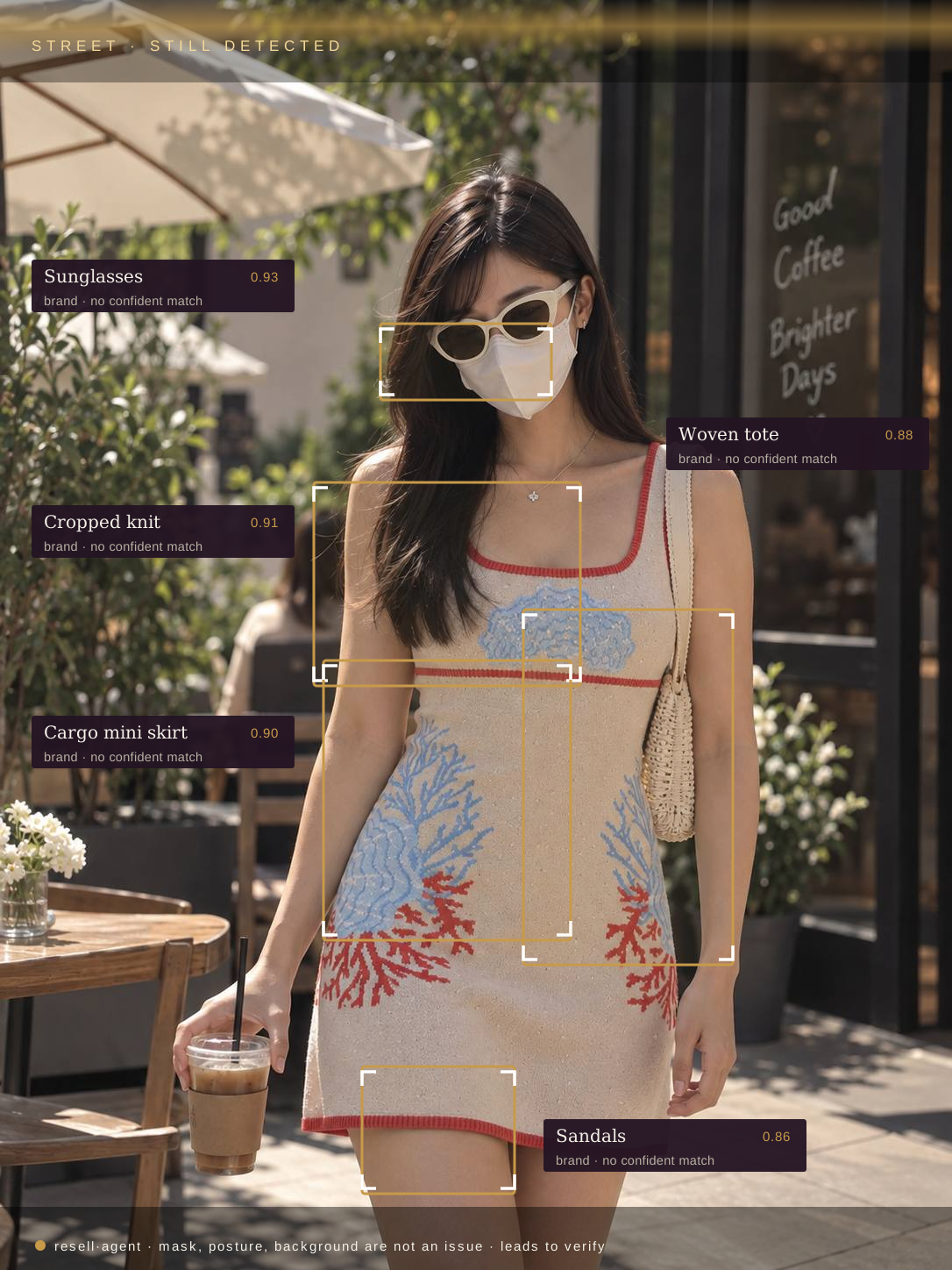
Illustrative examples of the outfit command's output.
Three things stand between a piece and its price
The willingness to sell was never the problem. The work is in the doing, and it is the same three steps every time.
The price
The honest market figure, drawn from real comparables, not a lowball, not a guess. Given as a range you set to taste, never false precision.
The words
A listing that reads considered rather than eager, in the voice each platform rewards, keyword-dense on eBay, warmer on Poshmark, style-forward on Depop.
The placement
On eBay, Poshmark, and Depop, where the buyers for these pieces are already looking, with category and item specifics resolved for you.
Second-hand luxury is no longer the second choice
The market for pre-owned luxury is worth roughly $40 to 63 billion and compounds at 8 to 10% a year, roughly three times the pace of first-hand luxury, heading past $70 billion within the decade. The buyers are already there; the discipline is getting your piece in front of them, priced right.
the global second-hand luxury market today, growing 8 to 10% a year
faster growth than the first-hand luxury market
of sales are handbags and leather goods; watches and jewellery near 28%
of buyers cite price and value retention as their reason to buy pre-owned
Sources: Towards Consumer Goods, Research and Markets, BCG, P&C Global (2025-26 estimates).
Value kept is value quietly lost
A piece left in a closet is money that has stopped working. Styles move on, condition softens, and the space it occupies is space you pay for. The best moment to sell was when you stopped reaching for it; the next best is before another season turns.
The pieces that hold their price
Some categories resell far better than others. These are the ones worth photographing first.
Designer handbags
The strongest resale of all. A recognised house in good condition returns most of its retail, and the discontinued can ask more.
Outerwear
Coats and jackets photograph clearly and price with confidence; a good wool or a technical shell holds across seasons.
Footwear
Sought-after heels, boots, and sneakers move quickly once the size and the condition are stated plainly.
Denim & contemporary
The everyday middle of the market: high volume, quick sales, where a clean, correct listing wins the click.
Jewellery & watches
Small, high in value, and forgiving of trend. Authentication matters most here, so the tool flags rather than claims.
Occasion pieces
The worn-once dress, the event coat, bought at a premium and sold on with much of that premium intact.
By hand, or in a photograph
By hand
- Trawl sold listings to guess a price
- Write a title that buyers actually search
- Pick the right category from thousands
- Fill in every item specific by hand
- Rewrite it all again for the next platform
In a photograph
- A price range from real comparables
- A keyword-dense title, written for you
- Category and specifics resolved automatically
- The house read or inferred, flagged to verify
- eBay, Poshmark, and Depop copy, all in one pass
One photograph, not one at a time
The real tedium was never the selling. It is the marking up: a title here, a category there, the same fields typed again for the next piece, and again for the one after that. So it does not ask you to. Point the camera at the whole look, or the whole pile on the bed, and it finds each sellable piece and drafts them together, priced and written, in a single pass.
“ I would rather point at a photograph than catalogue a closet one piece at a time.
Photograph one piece.
See what a single run makes of it: the price, the words, the placement, ready for you to review.